


Protein Simple Jess A Guide to Automated Western Blotting
For years, anyone working in a lab knew the drill. Traditional Western blotting was a rite of passage, but it was also a massive bottleneck. The multi-day process was slow, manual, and notoriously finicky, holding back the pace of discovery.
The ProteinSimple Jess system was built to change all that. It’s an automated platform designed to deliver quantitative and reproducible protein analysis in just a few hours, finally moving protein science beyond the frustrations of manual methods.
Putting an End to Western Blotting Bottlenecks
Traditional Western blotting is a foundational technique, but let’s be honest—it’s a grind. Running gels, transferring proteins to membranes, blocking, incubating, imaging… every single step is an opportunity for error and variability. In high-stakes fields like neurodegenerative disease research, where every data point counts, that kind of inconsistency just isn't acceptable.
The Jess system was engineered from the ground up to solve these problems. It's more than just an instrument; it's a complete reimagining of the entire workflow.
Jess consolidates everything—protein separation, immobilization, immunodetection, and data analysis—into a single, capillary-based platform. This all-in-one approach completely overhauls how labs generate and think about protein data.
The system itself is a compact, benchtop unit that replaces a cluttered bench full of gels, transfer tanks, and imaging equipment.
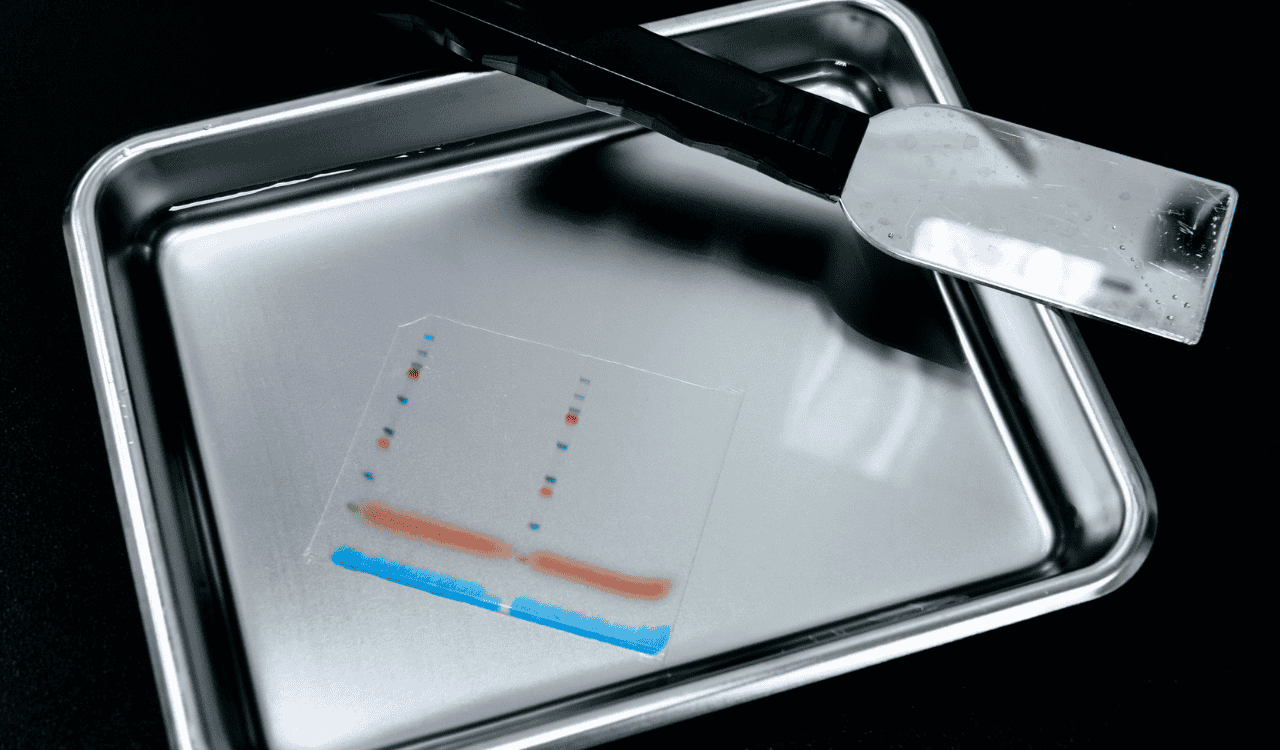
This image really gets to the heart of what Jess offers: a streamlined, walk-away solution that frees up researchers to focus on results, not on manual labor.
Meeting the Demands of Modern Protein Analysis
The move toward automated, quantitative platforms like Jess is part of a much larger shift in the life sciences. As research pushes deeper into therapeutic development and precision medicine, the demand for high-quality, reliable protein data has exploded.
Industry analysis shows the global protein expression market is expected to grow from $3.7 billion in 2024 to over $5.6 billion by 2030. This rapid expansion highlights just how critical efficient and scalable technologies have become. You can dig deeper into the protein expression market's growth and its drivers here.
By fully automating the Western blot, the ProteinSimple Jess system directly answers this call. It delivers the high-throughput, reproducible, and quantitative results that modern labs need to accelerate biomarker validation and push discovery forward, leaving the bottlenecks of the past behind.
How Jess Overhauls Protein Separation and Detection
To really get what the ProteinSimple Jess system does, it helps to think about the old way of doing things. A traditional Western blot feels like developing film in a darkroom. It's a hands-on, multi-day process with lots of messy, manual steps: running gels, transferring proteins, incubating, and finally, imaging. It works, but it’s an art form as much as a science.
The Jess, on the other hand, is like a modern digital camera. It automates that entire workflow, from sample to answer, inside one box.
So how does it pull this off? By completely redesigning two of the most fundamental steps: how proteins are separated and how they're detected. Instead of wrestling with those big, floppy slab gels, it uses a technique called Capillary Electrophoresis (CE).
Faster, Sharper Separation with Capillary Electrophoresis
In a traditional Western, proteins slowly creep through a slab of polyacrylamide gel. The process is not only sluggish but also prone to all sorts of variability. Jess throws that whole concept out. Your protein sample is loaded into a tiny glass capillary—think of it as a microscopic, high-speed racetrack for proteins.
When an electric field is applied, the proteins shoot through this capillary and separate based on their size, just like they would in a gel. The key difference is that this all happens in a perfectly temperature-controlled, automated environment. The separation is ridiculously fast, much more precise, and incredibly reproducible from run to run. A separation that takes hours on a gel is done in just a few minutes inside a capillary.
At its core, the ProteinSimple Jess system replaces slow, manual gels and blotting with fully automated, in-capillary separation and detection. This shift is what enables it to deliver quantitative results in just three hours.
No More Blotting: The Magic of In-Capillary Detection
The second huge leap forward is in-capillary immunodetection. This completely gets rid of the single most frustrating and error-prone step of a classic Western: the physical transfer of proteins from the gel to a membrane. Anyone who's done it knows that blotting can be inefficient and a major source of wonky, inconsistent data.
Jess just… skips it. After the proteins have been neatly separated by size inside the capillary, they are chemically cross-linked and locked down directly onto the capillary wall. It’s like flash-freezing the separated proteins right where they are.
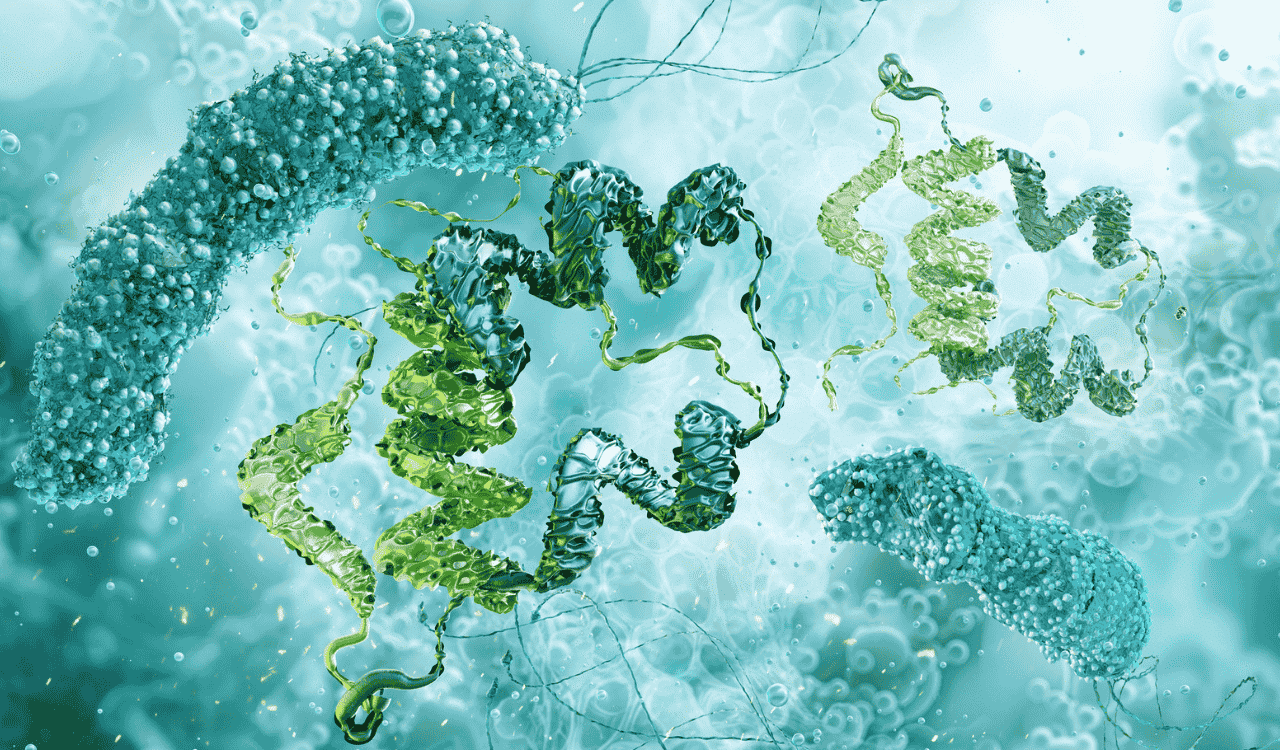
This image really drives home how Jess gets you past the typical bottlenecks of the old-school workflow.

Once the proteins are immobilized, the system automatically flushes the primary and secondary antibodies through the capillary to detect your protein of interest. All of this happens without a human hand ever touching it.
This totally hands-off approach is a game-changer for analyzing key biomarkers in neurological diseases. For example, getting reliable data on post-translationally modified proteins is crucial, and you can see why in our deep dive on tau and pTau in Alzheimer's research.
This integrated system doesn't just save you hours of bench time. It generates far more consistent and truly quantitative data, making it the perfect tool for demanding jobs like biomarker validation.
What Can You Really Do With a Protein Simple Jess?
Beyond just freeing up your afternoon from running manual Westerns, the Protein Simple Jess system fundamentally changes the questions you can ask. Its real strength isn't just automation; it's the versatile menu of assays that let you look at proteins from multiple angles, all while using a tiny drop of your precious sample.

This flexibility makes the Jess a lab workhorse. It’s just as useful for basic research as it is for high-stakes biomarker validation, especially when every microliter of sample counts.
Let's break down exactly what this platform brings to your bench.
Key Assay Formats on the Jess System
At its core, the Jess system offers several powerful ways to characterize proteins, going far beyond the simple "is it there or not?" answer from a traditional blot.
Size-Based Assays: This is your automated Western blot, but on steroids. It delivers highly quantitative data on protein size and expression, with sensitivity that reaches down to the picogram level.
Charge-Based Assays (cIEF): Sometimes, size isn't the whole story. With charge-based separation, you can separate proteins by their isoelectric point. This is absolutely critical for analyzing charge variants, like those that come from post-translational modifications (PTMs).
Total Protein Normalization: For truly bulletproof quantification, Jess can stain and measure the total protein in every single capillary. This lets you normalize your target protein signal against the actual protein load, effectively erasing errors from tiny pipetting mistakes.
These different views combine to give you a much more complete picture of your protein of interest, all from a single instrument. That's a huge advantage for any lab needing robust, multi-dimensional data.
One of the most talked-about features is Jess's speed and efficiency. The system can process up to 25 samples in about 3 hours, and it only needs as little as 3 µL of sample to do it.
To put this in perspective, here's a quick comparison with the old-school method.
Protein Simple Jess Vs Traditional Western Blotting
| Feature | Traditional Western Blot | Protein Simple Jess |
|---|---|---|
| Hands-on Time | 4+ hours | < 30 minutes |
| Total Run Time | 1-2 days | ~3 hours |
| Sample Volume | 10-30 µg of protein (20-40 µL) | 0.6-1.2 µg of protein (3 µL) |
| Throughput | 10-15 samples per gel | 25 samples per run |
| Data Type | Semi-quantitative (at best) | Fully quantitative |
| Normalization | Relies on housekeeping proteins | In-capillary total protein normalization |
| Reproducibility | Highly user-dependent, variable | Automated, highly consistent |
The table really speaks for itself. The shift to Jess is about gaining speed, conserving precious samples, and getting quantitative, reproducible data you can actually trust.
Squeezing More Data from Every Single Sample
If you're working with rare or hard-to-get samples—think neuron-derived exosomes from patient CSF or laser-capture microdissected tissue—you simply can't afford to waste any material. This is where two of Jess's most powerful features come into play: Multiplex Detection and RePlex™.
Multiplex Detection is exactly what it sounds like. It lets you probe for several different proteins in the same capillary at the same time. By using different fluorescent channels, you can analyze an entire signaling pathway or compare a target protein to its loading control in a single go. This immediately cuts your sample consumption in half, or even more.
The RePlex™ feature takes this concept a step further. After you've run a standard immunodetection, you can have the Jess automatically strip the antibodies off and re-probe that exact same sample with a new set of antibodies.
Imagine confirming a phosphorylation event by first probing for the phospho-specific form of your protein, then stripping and re-probing for the total protein—all on the same immobilized sample. It gives you an incredible level of confidence in your data and lets you extract the absolute maximum amount of information from one precious aliquot.
From Sample Prep to Actionable Data
Getting the most out of a ProteinSimple Jess system doesn’t just start when you hit the "run" button. The real work—and the secret to success—begins with careful sample preparation and ends with smart data analysis. For any lab trying to validate biomarkers, mastering these two ends of the workflow is everything. It’s what separates noisy, questionable data from the kind of reliable, reproducible results that hold up under scrutiny.

I like to think of it like baking. You can have the fanciest oven on the market, but if you use expired flour or misread the recipe, your cake is going to be a flop. The exact same principle applies here. Your final data is only as good as the sample you put in at the start.
Best Practices for Sample Preparation
Honestly, most of the headaches I see with the Jess system—things like protein aggregation or wildly inconsistent signals—trace right back to sloppy sample prep. If you nail this part, you're more than halfway to a successful run.
Here are a few non-negotiable tips to get your samples ready for prime time:
- Prep the Right Lysate: Always start with a lysis buffer that plays well with the Jess. High concentrations of detergents like SDS are a no-go; they can seriously mess with the capillary separation. And don't forget to add protease and phosphatase inhibitors to keep your proteins intact.
- Quantify, Quantify, Quantify: Don't just eyeball it. Using a reliable method like a BCA assay to get a precise protein concentration is absolutely critical. This is the only way to be sure you’re loading the same amount into every single capillary.
- Dilute with Care: Once you have your concentration, dilute your samples down to the target range—usually somewhere between 0.2 to 2.0 mg/mL—with the recommended sample buffer. This step is key to avoiding an overloaded capillary, which leads to ugly, broadened peaks and poor resolution.
The entire goal of sample prep is pretty straightforward: give the Jess a clean, consistent, and accurately measured sample. Putting in the effort upfront is the single best thing you can do to reduce variability and generate data you can actually trust.
Turning Raw Signals into Real Insights with Compass Software
Once the three-hour run wraps up, the Jess system’s Compass for SW software takes the wheel. This is where the platform’s real power shines. The software automatically translates the raw fluorescent signals from each capillary into clean, clear, and quantitative data. It completely sidesteps the subjective, time-consuming manual densitometry that makes traditional Westerns so painful.
The software gives you two primary ways to look at your results. First, there's the lane view, which looks a lot like a classic Western blot image, showing you bands at their expected molecular weights. But the real game-changer is the electropherogram view. This transforms the same data into a graph, where each protein band is represented by a peak. The software automatically calculates the area under each peak, giving you a direct quantitative measurement of that protein's abundance.
This automated analysis spits out molecular weight, peak area, and signal-to-noise ratios, delivering the kind of data integrity that’s essential for regulated research. That level of precision is exactly what you need when you're navigating complex samples and trying to get a complete picture, a core theme we explore in our guide on understanding biomarker analysis in medicine. With Compass, you go straight from run to results, ready for real interpretation.
So, you’re looking to bring the ProteinSimple Jess into a regulated lab environment. It's a common and critical step. For labs working under the tight scrutiny of GxP guidelines—like Good Laboratory Practice (GLP) or Clinical Laboratory Improvement Amendments (CLIA)—adopting any new technology is about more than just getting it to work. It’s about proving it works reliably, compliantly, and with full validation every single time.
The good news is that the Jess system wasn’t an afterthought for regulated work; it was built with these demanding environments in mind. Making the leap from a research-use-only setup to a validated, compliant workflow is a structured process. Think of it as building a fortress of data around the instrument and your assays, making every result completely defensible to auditors and regulatory bodies.
This transition is becoming more urgent as the demand for protein-based therapeutics and diagnostics explodes. The broader protein market is on a steep upward trajectory, valued at USD 52.26 billion in 2024 and projected to hit USD 100.19 billion by 2033. This growth highlights the absolute necessity for compliant, high-throughput technologies like Jess. You can read more about what’s fueling the protein market's substantial expansion.
The Three Pillars of GxP Integration
Successfully deploying a Jess system in a regulated lab really comes down to three core pillars: Instrument Qualification, Assay Validation, and using the built-in compliance tools. Get these right, and you'll be generating regulator-ready data from day one.
Instrument Qualification (IQ/OQ/PQ): Before you even think about running a precious clinical sample, the machine itself needs to be formally qualified. This multi-step process is non-negotiable and confirms the Jess performs exactly as promised, right in your own lab.
- Installation Qualification (IQ): The first step. It’s simply documented proof that the Jess was installed correctly, following the manufacturer’s exact specifications.
- Operational Qualification (OQ): Next, you test and document that every part of the instrument—from the robotics to the detectors—operates as it should.
- Performance Qualification (PQ): Finally, you prove the instrument consistently delivers the expected performance for your specific assays and applications.
Assay Validation: This is where the real scientific rigor comes in. It’s the process of proving, with hard data, that your specific assay is fit for its intended purpose. You have to systematically test and document its performance from every angle. Key parameters include:
- Specificity: Does your assay only detect the target protein you’re looking for?
- Linearity & Range: What is the concentration range where the assay gives accurate, proportional results?
- Precision: How much do the results vary when you run the same sample multiple times, both in the same run and across different runs?
- Accuracy: How close are your measurements to the known, true value?
A perfect real-world example is validating a biomarker for a clinical trial. Let's say you're using Jess to measure a specific neurodegenerative biomarker in patient plasma. The validation package you build proves that your assay is sensitive and specific enough to reliably track changes in that biomarker as a patient responds (or doesn't) to a new drug.
Capitalizing on 21 CFR Part 11 Compliance Tools
The final piece of the compliance puzzle is the software. The Compass for SW software that runs the ProteinSimple Jess comes equipped with features specifically designed to meet 21 CFR Part 11, the FDA’s rule on electronic records and electronic signatures. These aren’t just nice-to-haves; they are essential for maintaining data integrity. You can see how these validated assays play a crucial role by looking into our clinical trial services.
The most critical features here are secure user access controls, which let you define roles and limit who can do what on the system, and comprehensive audit trails. These trails create an unchangeable, time-stamped log of every single action: who ran an assay, when they ran it, what settings were used, and if any changes were made. This is the exact transparency and traceability that auditors need to see.
Common Problems and How to Solve Them
Even with a highly automated platform like the ProteinSimple Jess, a bit of hands-on expertise is what separates good results from great ones. Think of it like a high-performance car—it runs beautifully on its own, but a skilled driver knows how to push it to its limits. This guide is your quick-reference manual for diagnosing and fixing the most common hiccups.
Most issues on the Jess, like weak signals or high background, can be traced back to a few usual suspects: antibody concentration, sample quality, or blocking efficiency. If you address these methodically, you can get your assay back on track fast and ensure every run delivers clean, reliable data.
Fixing Weak or Non-Existent Signals
One of the biggest frustrations is getting a signal that’s faint or completely absent. Before you start questioning the instrument, the first place to look is almost always your antibodies.
- Adjust Antibody Concentration: Just because an antibody worked for a traditional Western doesn't mean it's optimized for the Jess. A low signal might simply mean you need to up your primary antibody concentration. Start with a titration experiment, testing a range of concentrations to find that sweet spot.
- Check Antibody Viability: Make sure your antibody is stored correctly and hasn't expired. Repeated freeze-thaw cycles are notorious for degrading antibody performance, which can kill your signal.
The perfect antibody concentration for a ProteinSimple Jess assay is a balancing act. You need enough to generate a strong signal but not so much that it creates a noisy background. A simple 3-point titration (e.g., 1:25, 1:50, 1:100) is usually all it takes to dial in the ideal working dilution.
Eliminating High Background Noise
High background can easily swamp your real signal, making quantification a nightmare. This problem almost always points to non-specific binding, which you can manage with a few tweaks.
First, if your background is high, your primary or secondary antibody concentration might be the culprit. Try diluting them further. Second, take a look at your blocking step. While the Jess handles this automatically, you have to make sure you're using the right blocking buffer for your specific assay.
Sometimes, adding a tiny amount of a gentle detergent like Tween-20 to the antibody diluent can work wonders for reducing those non-specific interactions. Finally, never underestimate the impact of poor sample quality. Cell debris or protein aggregates will create a messy background every time. Always spin down your samples right before loading to get rid of any particulates.
Common Questions About the Protein Simple Jess, Answered
Bringing a new platform like the Protein Simple Jess into your lab is a big decision. It's natural to have questions about how it really performs, what it costs, and whether it plays nicely with your existing lab protocols.
Let's cut through the noise and tackle the most common questions we hear from scientists who are thinking about making the switch to automated, quantitative protein analysis. Getting straight answers here is the only way to make an informed choice and see exactly how Jess could fit into your lab's workflow.
How Does Jess Sensitivity Compare to Other Methods?
The short answer? The Protein Simple Jess system routinely hits picogram-level sensitivity. This puts it on par with—and often, a step above—standard chemiluminescent Western blots.
But sensitivity isn't the whole story. While a perfectly optimized ELISA might detect an even smaller amount of a single target, it can't give you the one thing that's non-negotiable for serious biomarker work: molecular weight information.
This is what truly sets Jess apart. Seeing the exact size of your protein confirms its identity and lets you spot isoforms, cleavage products, or other post-translational modifications. For robust biomarker validation, that kind of data is absolutely essential. With Jess, you get both quantification and specificity in a single, automated run.
What's the Real Cost Per Sample?
Looking at the upfront instrument cost, the Jess is a significant investment compared to a basic Western blot rig. But the real picture emerges when you look at the cost per sample over time, especially when you factor in the massive reduction in hands-on labor.
A traditional Western blot can easily tie up a skilled scientist for 4+ hours with manual gels, transfers, and washes. The Protein Simple Jess cuts that hands-on time down to less than 30 minutes.
This is a game-changer. It frees up your team's most valuable resource—their time—to focus on interpreting data and designing the next experiment, not babysitting a blot.
Plus, the system's tiny sample and antibody requirements add up to big savings in the long run. For labs running a high volume of samples, the gains in efficiency, data quality, and reproducibility often mean the total cost of ownership ends up being far more competitive than you'd think.
Can I Use My Existing Western Blot Antibodies?
In most cases, yes. If you have an antibody that’s already been validated and gives you a clean, strong signal on a traditional Western, it’s a fantastic candidate for the Jess platform.
That said, a little optimization is almost always needed to get the best signal-to-noise ratio in the capillary system. We always recommend running a simple antibody titration experiment as a first step. This quick check helps you nail down the ideal concentration before you run a full 25-sample plate, saving you time, precious reagents, and a lot of potential frustration.
At NeuroDex Inc, we use advanced platforms like the Protein Simple Jess to give our partners validated, compliant, and truly actionable biomarker data for their neurodegenerative disease research. See how our expertise can push your clinical trial goals forward by visiting our website: https://neurodex.co.

Leave a Reply