



Your End-to-End Partner for the Isolation and Profiling of Neuron-Derived Extracellular Vesicles (NDEs)
Measuring brain biology has long meant invasive procedures, sparse time points, and signals diluted by everything else circulating in the body. Neuron-derived extracellular vesicles (NDEVs) change that. As a dedicated, end-to-end service provider for the isolation and profiling of neuron-derived extracellular vesicles, Neurodex turns a routine blood draw into quantitative readouts of neuronal signaling, target engagement, and disease biology—giving drug developers a minimally invasive window into the central nervous system (CNS).
This guide explains what NDEVs are and how they form, why they have become a strategic tool for CNS and metabolic programs, where isolation and profiling typically break down, and how Neurodex delivers a single, validated workflow from sample to data. Whether you are designing a first-in-human study, building pharmacodynamic endpoints, or stratifying patients for a pivotal trial, NDEV biomarkers can de-risk the decisions that matter most.
What are neuron-derived extracellular vesicles (NDEVs)?
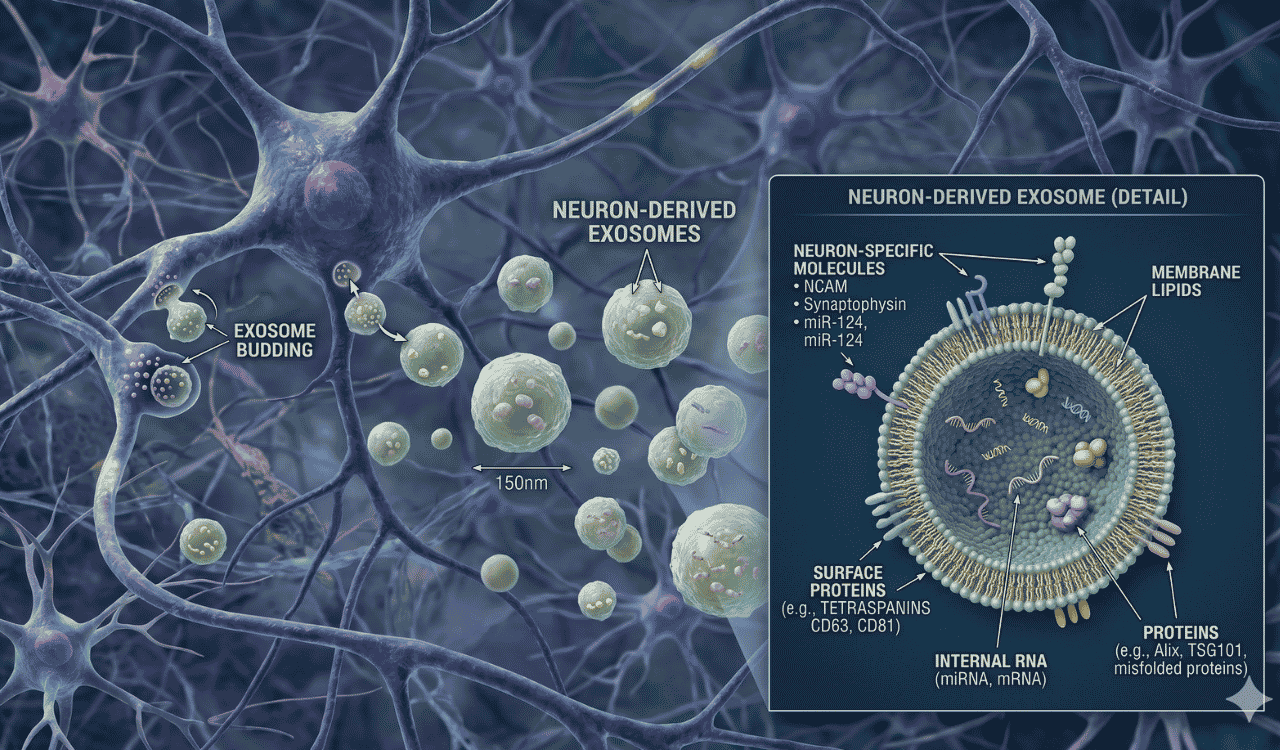
Extracellular vesicles (EVs) are nanoscale, membrane-bound particles released by virtually every cell type. They carry a protected cargo of proteins, lipids, and nucleic acids that reflects the state of the cell that produced them. Because that cargo is encapsulated within a lipid bilayer, it remains comparatively stable in circulation—making EVs an attractive vehicle for biomarkers.
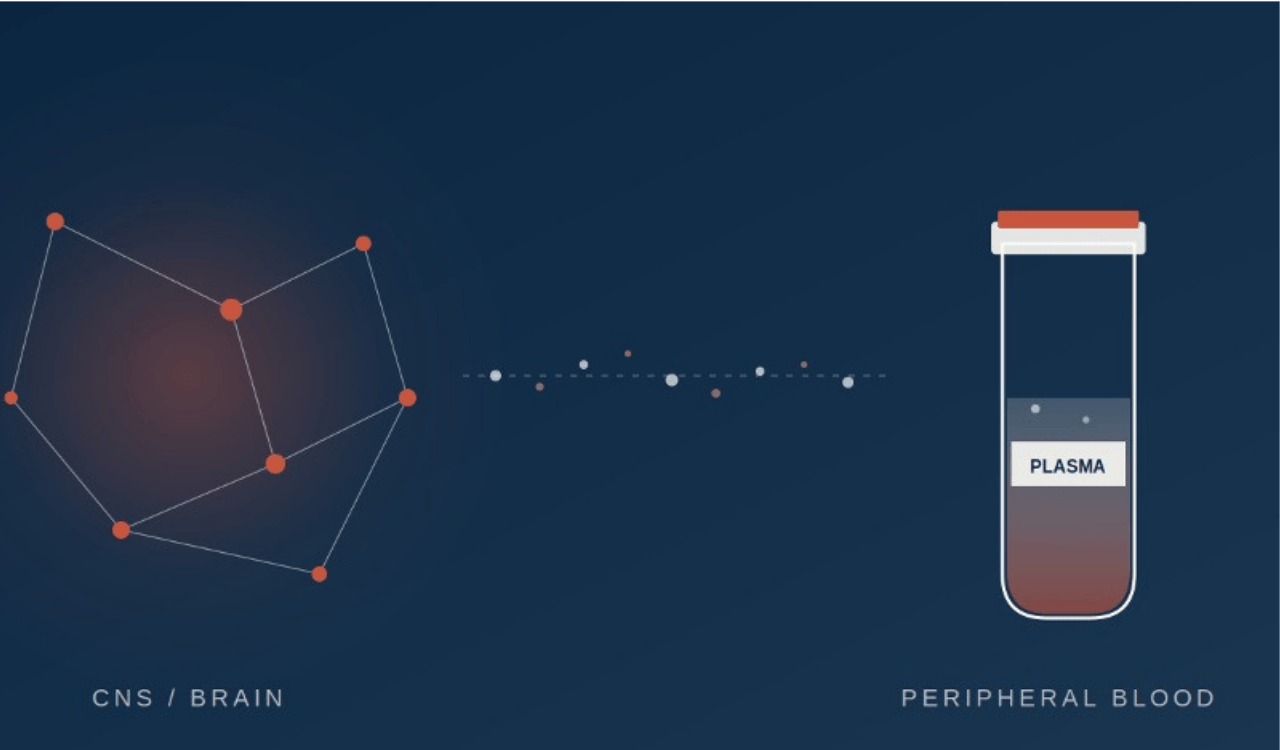
A specialized subset of these vesicles originates in neurons. These neuron-derived extracellular vesicles (NDEVs)can cross from the brain into peripheral blood, where they circulate alongside vesicles from every other tissue in the body. Functionally, they act as molecular messengers from the CNS: their contents mirror intracellular neuronal biology, including synaptic proteins, signaling-pathway components, and pathology-associated molecules.
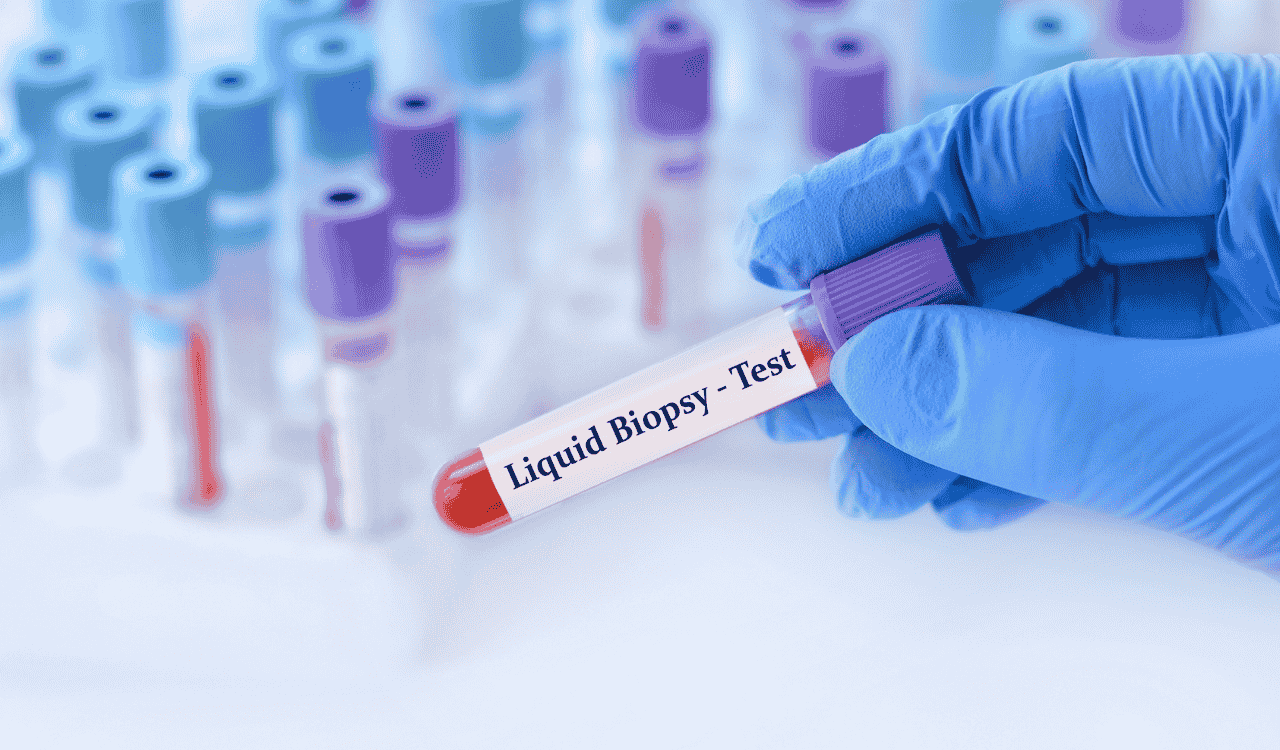
Isolating and profiling NDEVs from plasma therefore offers a blood-based proxy for processes that would otherwise require cerebrospinal fluid (CSF) or tissue. In effect, NDEV analysis functions as a liquid biopsy for the brain.
How NDEVs form and reach the bloodstream
Neurons release vesicles through several routes, including the budding of small vesicles from internal compartments and shedding from the cell membrane. A portion of this material traverses the brain’s barriers and enters peripheral circulation. Once in blood, NDEVs are vastly outnumbered by vesicles from platelets, blood cells, endothelium, and other organs—which is exactly why specific, well-controlled enrichment is the central technical challenge.
What NDEVs carry: the biomarker payload
The value of NDEV profiling comes from the breadth and specificity of the cargo. Representative categories include:
Cargo category | Representative analytes & relevance |
Synaptic proteins | Synaptic and vesicle-trafficking proteins that report on synaptic integrity and neurodegeneration. |
Pathology-associated proteins | Disease-linked molecules relevant to neurodegenerative conditions such as Alzheimer’s and Parkinson’s disease. |
Signaling-pathway proteins | Pathway components (e.g., Akt–mTOR) used as pharmacodynamic and target-engagement readouts. |
Neuronal identity markers | Markers such as L1CAM used—with proper controls—to define the neuron-derived population. |
Reading these low-abundance molecules reliably requires both clean enrichment and high-sensitivity detection—two capabilities that an integrated service is designed to deliver together rather than in isolation.
Why NDEVs matter for CNS and metabolic drug development
For pharma and biotech R&D teams, NDEVs address a long-standing gap: how do you confirm that a candidate is reaching the brain and engaging its target without sampling the brain itself? Blood-based NDEV analysis supports decisions across the development lifecycle.
- CNS target engagement and pharmacodynamics — Measure whether a compound produces drug-specific changes in neuronal signaling pathways, generating peripheral evidence of central activity.
- Go/no-go and dose decisions — Use objective, longitudinal biomarker readouts to de-risk early-phase trials before committing to larger, costlier studies.
- Patient stratification and enrichment — Identify the patients most likely to respond, sharpening trial populations and improving statistical power.
- Disease detection, staging, and monitoring — Track biological change over time across neurological, neuropsychiatric, and metabolic conditions.
- Minimally invasive, repeatable sampling — Replace or complement CSF sampling with a blood draw that can be repeated across visits and scaled across a trial population.
How NDEVs compare to other CNS readouts
NDEVs are not a wholesale replacement for established methods, but they fill gaps that imaging and CSF cannot address economically or repeatedly.
Attribute | Blood-based NDEVs | CSF sampling | Neuroimaging (PET/MRI) |
Invasiveness | Minimal (blood draw) | High (lumbar puncture) | Low to moderate |
Repeatability across visits | High | Limited | Moderate (cost-limited) |
Molecular / pathway detail | High (protein, RNA cargo) | High | Low (structural/functional) |
Scalability across a trial | High | Low | Moderate |
Cell-type specificity | Neuron-specific (enriched) | Mixed CNS signal | Region-level |
Proof in the literature: blood-based CNS target engagement
Recent peer-reviewed work illustrates the payoff. In a study published in the Journal of Clinical Endocrinology & Metabolism, Neurodex and Stanford University researchers used blood-based NDEVs to demonstrate—for the first time—CNS target engagement of GLP-1 and PPARγ agonists. The analysis combined samples from two placebo-controlled clinical trials: pioglitazone (a PPARγ agonist) in adults with unremitted major depressive disorder, and liraglutide (a GLP-1 receptor agonist) in middle-aged adults at genetic risk for Alzheimer’s disease.
Measuring proteins in the Akt–mTOR signaling pathway at baseline and after 12 weeks, both drugs produced significant, drug-specific changes in central pathway biomarkers detectable from plasma alone. The result is a concrete template for using NDEVs as pharmacodynamic and target-engagement endpoints in CNS and metabolic programs. See more in the Neurodex publications library.
Where NDEV isolation and profiling usually break down
Many programs attempt NDEV work by stitching together separate vendors and protocols. The result is variability that undermines biomarker data and erodes confidence in downstream decisions. Common failure points include:
- Specificity of enrichment — Neuronal markers such as L1 cell adhesion molecule (L1CAM) require carefully validated, well-controlled methods. The reliability of L1CAM-based isolation has been actively debated in the literature, and rigorous controls are essential to ensure the captured population is genuinely neuron-derived.
- Pre-analytical variability — Differences in blood collection, processing time, and storage introduce noise long before any vesicle is isolated—often the largest hidden source of variance in a study.
- Low-abundance detection — NDEV cargo proteins are present at very low concentrations and demand high-sensitivity assays to quantify reproducibly.
- Reproducibility and hand-offs — Splitting isolation and profiling across labs multiplies batch effects and makes data hard to compare across sites and time points.
- Data normalization — Without consistent normalization and quality control, apparent biological signals can reflect technical artifacts instead of true change.
An end-to-end service provider removes these seams by controlling the entire chain—from sample logistics to the final biomarker readout—under one validated, standardized workflow.
Neurodex: a single, validated workflow from sample to signal
Neurodex is a biomarker company built around blood-based measurement of brain biology. Our proprietary ExoSORT™ platform enriches neuronal extracellular vesicles from plasma and pairs that enrichment with high-sensitivity profiling—delivered as one integrated biomarker and research service rather than a collection of disconnected steps. The result is consistency across every sample, site, and time point in your program.
The end-to-end NDEV service workflow
- Sample collection and handling guidance — Standardized, trial-ready protocols that minimize pre-analytical variability from the first blood draw.
- Neuron-specific EV isolation — ExoSORT™ enrichment of NDEVs from plasma, designed for specificity to the neuronal population of interest.
- Multi-analyte profiling — Quantification of NDEV protein and signaling-pathway cargo using validated, high-sensitivity assays.
- Targeted biomarker panels — NDEV panels for disease detection, staging, treatment monitoring, and pathway/target-engagement readouts.
- Data analysis, normalization, and reporting — Quality-controlled, decision-ready results delivered in formats suited to translational research and clinical trials.
Built for regulated drug development
Neurodex solutions are validated under GLP and CLIA standards, so NDEV data integrates into clinical workflows and supports regulated programs across neurological, neuropsychiatric, and metabolic indications. Working with a single accountable partner also means consistent methods, documentation, and quality control across every site and visit in a study—critical when biomarker endpoints feed regulatory decisions.
Applications across the pipeline and therapeutic areas
Pharmacodynamic and pathway-engagement biomarkers
Assess biological responses to treatment by measuring drug-specific changes in NDEV-associated signaling proteins—peripheral evidence that a candidate is acting on its CNS target, as demonstrated for GLP-1 and PPARγ agonists.
Neurodegenerative disease
NDEVs can carry disease-associated cargo relevant to Alzheimer’s disease and Parkinson’s disease, supporting early detection, staging, longitudinal monitoring, and treatment evaluation in trials targeting these conditions.
Neuropsychiatric indications
NDEV cargo has been studied in the context of mood disorders and antidepressant response, offering objective molecular readouts in a therapeutic area that has historically relied on subjective endpoints.
Metabolic therapies with CNS effects
As metabolic drugs increasingly show central activity, NDEVs provide a way to confirm and quantify CNS pharmacodynamic effects from plasma—linking peripheral dosing to central biology.
Translational and clinical research
From discovery cohorts to placebo-controlled trials, NDEV profiling provides quantitative, minimally invasive endpoints that scale across subjects and visits.
What working with Neurodex looks like
Engagements are scoped to your program’s stage and endpoints. A typical collaboration moves through a few clear phases:
- Scoping — We align on your indication, mechanism, target pathway, and the decisions the biomarker data must support.
- Assay and panel design — We configure NDEV isolation and the profiling panel—pathway-engagement, disease, or custom analytes—to your study.
- Sample processing — Samples are handled under standardized, GLP/CLIA-aligned procedures with quality control throughout.
- Analysis and delivery — You receive normalized, decision-ready results with the documentation needed for translational or regulated use.
Why choose Neurodex as your NDEV service provider
- Truly end-to-end — Isolation and profiling under one roof, eliminating cross-vendor variability.
- Proprietary ExoSORT™ enrichment — A platform purpose-built for neuronal EV specificity from blood.
- Validated and regulated-ready — GLP- and CLIA-aligned processes for clinical and drug-development programs.
- Proven in the literature — Peer-reviewed evidence of blood-based CNS target engagement, including collaborative work with Stanford.
- Decision-focused data — Readouts designed to inform go/no-go, dose, and stratification decisions.
- Cross-indication experience — Neurological, neuropsychiatric, and metabolic programs supported on a single platform.
Frequently asked questions
What does “end-to-end” NDEV service mean?
It means a single provider manages every step—sample handling guidance, neuron-specific EV isolation, multi-analyte profiling, panel readouts, normalization, and reporting—so data is consistent and comparable across sites and time points, with no hand-offs between vendors.
How are neuron-derived EVs isolated from blood?
NDEVs are enriched from plasma using neuronal markers (such as L1CAM) with validated, well-controlled methods. Neurodex uses its proprietary ExoSORT™ platform to enrich the neuronal vesicle population before profiling, with controls in place to support specificity.
Can NDEV profiling show whether my drug reaches the brain?
Yes. NDEV-associated signaling proteins can reveal drug-specific pharmacodynamic changes, providing blood-based evidence of CNS target engagement—demonstrated in peer-reviewed studies of GLP-1 and PPARγ agonists using the Akt–mTOR pathway.
Is L1CAM a reliable marker for neuron-derived EVs?
L1CAM is the most widely used neuronal EV marker, and single-EV analyses support its use when paired with rigorous controls. Its specificity has been debated in the literature, which is precisely why validated methods, appropriate controls, and an integrated workflow matter.
Is the service suitable for clinical trials?
Neurodex solutions are validated under GLP and CLIA standards and are designed to integrate into clinical workflows across neurological, neuropsychiatric, and metabolic indications.
Which indications can NDEV biomarkers support?
Applications span neurodegenerative diseases (e.g., Alzheimer’s and Parkinson’s), neuropsychiatric conditions, and metabolic therapies with CNS effects—covering detection, staging, monitoring, and target-engagement assessment.
How much blood is required?
NDEV analysis is performed from a standard blood draw, making it minimally invasive and repeatable across study visits. Specific volume and handling requirements are confirmed during scoping based on your panel and study design.
References
Primary and supporting sources behind the science described above:
- NeuroDex and Stanford Researchers Publish First Evidence of CNS Target Engagement for GLP-1 and PPARγ Agonists Using Blood-Based Neuron-Derived Extracellular Vesicles. BioSpace, 2026.
- Single-extracellular vesicle (EV) analyses validate the use of L1 Cell Adhesion Molecule (L1CAM) as a reliable biomarker of neuron-derived EVs. PMC (2024).
- Synaptic proteins in neuron-derived extracellular vesicles as biomarkers for Alzheimer’s disease: novel methodology and clinical proof of concept. PMC (2023).
- Neuron-derived extracellular vesicles enriched from plasma show altered size and miRNA cargo as a function of antidepressant drug response. Molecular Psychiatry (2021).
- Isolation and quantification of L1CAM-positive extracellular vesicles on a chip as a potential biomarker for Parkinson’s disease. PMC.
- Proteomics profiling of neuron-derived small extracellular vesicles from human plasma: enabling single-subject analysis. PMC.
- Neurodex — Our Publications. co.
Talk to Neurodex about your NDEV program
If you need a proven, end-to-end service provider for the isolation and profiling of neuron-derived extracellular vesicles, Neurodex can take your program from blood draw to validated biomarker readout. Contact our team to scope isolation, profiling, and panel design for your CNS or metabolic study.
Learn more: neurodex.co

Leave a Reply