



TDP-43 Measurement: Why Blood-Based Detection Has Been So Hard — and How That’s Changing
For more than a decade, TDP-43 has been recognized as one of the most important pathological proteins in neurodegenerative disease. It is found in over 97% of ALS cases, in roughly 40% of frontotemporal dementia cases, and as a co-pathology in a large share of Alzheimer’s-spectrum disease. Despite that central role, reliable TDP-43 measurement in living patients has remained one of the field’s hardest problems — until recently.
Why TDP-43 Measurement Is Difficult
TDP-43 is not a brain-exclusive protein. It’s expressed throughout the body, which means conventional plasma-based TDP-43 measurement is swamped by biological background from peripheral cell types that have nothing to do with neurodegeneration. Researchers have long known TDP-43 pathology matters; the challenge has been isolating a signal that actually reflects what’s happening inside neurons of the brain and spinal cord, from a routine blood draw.
This is the core obstacle that has kept TDP-43 out of reach as a practical biomarker for diagnosis, patient selection, or treatment monitoring in clinical trials.
A Neuron-Specific Approach to TDP-43 Measurement
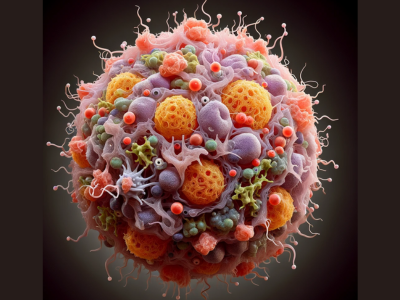
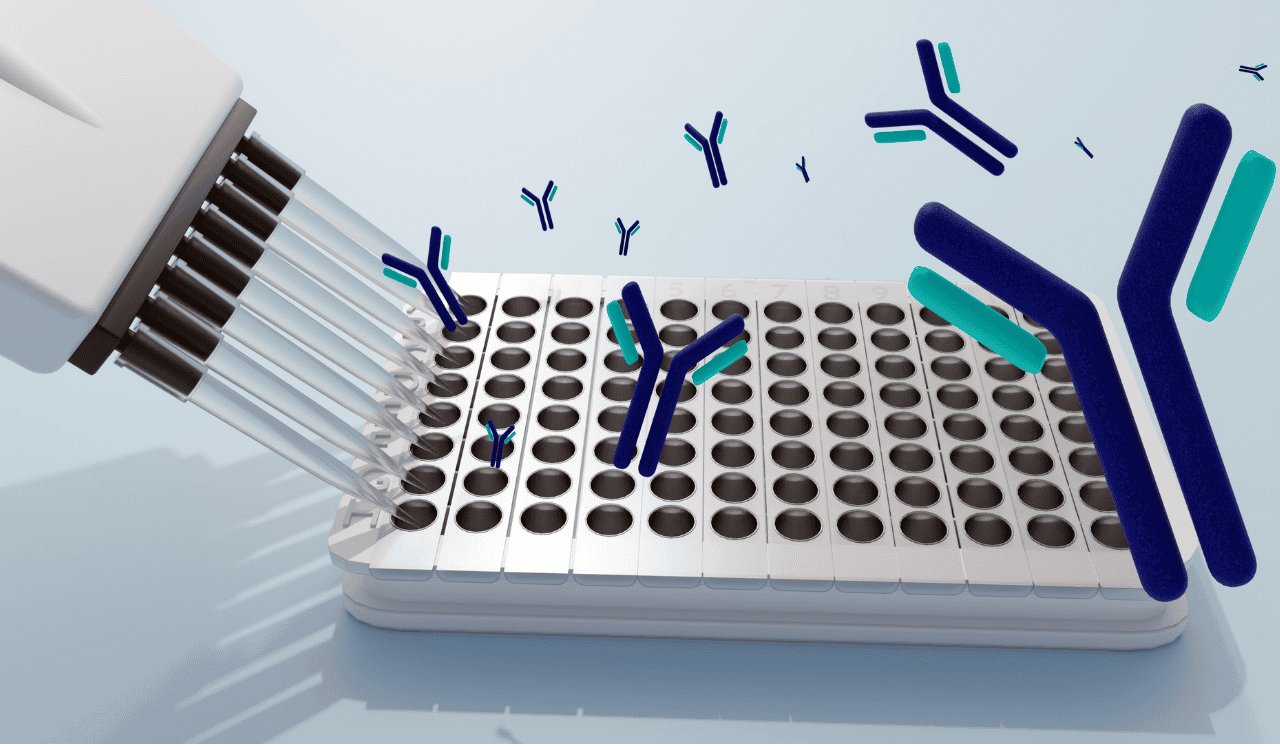
NeuroDex’s ExoSORT™ platform was built to solve exactly this problem. Rather than measuring TDP-43 in whole plasma, ExoSORT™ selectively enriches neuron-derived extracellular vesicles (NDEs) — small particles released by neurons that carry a molecular snapshot of what’s happening inside the cell. Using neuronal antibodies in a scalable, automated 96-well workflow, ExoSORT™ increases neuronal signal more than 50-fold compared to conventional plasma analysis. That enrichment step is what turns TDP-43 — a protein with broad tissue expression — into a usable, neuron-specific biomarker.
What the Data Show
Across three independent cohorts, ExoSORT-based TDP-43 measurement consistently distinguished sporadic ALS from healthy controls:
- 75 ALS vs. healthy controls: 44% increase (P=0.0003)
- 25 ALS vs. 30 healthy controls: 52% increase (P=0.002)
- 52 ALS vs. 37 healthy controls: more than 2-fold increase (P<0.0001)
Longitudinal follow-up showed NDE-associated TDP-43 rising over time in sporadic ALS, with an estimated 45% annual increase, tracking disease severity as measured by ALSFRS-R.
From Detection to Treatment Response
Distinguishing disease from healthy controls is one thing. Tracking treatment effect is another — and it’s where TDP-43 measurement has taken its most significant step forward.
In NeuroSense Therapeutics’ Phase 2b PARADIGM trial of PrimeC, NeuroDex applied ExoSORT™ to serial blood samples collected across every study visit. NDE-associated TDP-43 rose in the placebo group, consistent with the natural-history pattern seen in prior cohorts. In the group receiving PrimeC, however, TDP-43 dropped significantly from baseline over the six-month treatment period — mirroring the trial’s separately reported effects on functional decline and survival.
That combination — a biomarker that separates disease from health, moves with progression, and responds to treatment — is what makes TDP-43 measurement newly relevant for clinical trial design, not just research.
Why This Matters for ALS and Beyond
A working blood-based TDP-43 measurement has implications well beyond a single trial:
- Patient selection: identifying patients with active TDP-43 pathology for enrollment in targeted trials
- Pharmacodynamic monitoring: confirming a drug is engaging its intended biological target, not just improving symptoms
- Trial efficiency: reducing reliance on slower clinical endpoints alone
Because TDP-43 pathology extends into frontotemporal dementia and LATE (Limbic-predominant Age-related TDP-43 Encephalopathy), a validated measurement approach in ALS has direct relevance for biomarker strategies across the broader neurodegeneration field.
The Bottom Line
TDP-43 measurement has been limited less by the protein’s biological importance and more by the tools available to detect it cleanly. By enriching for neuron-derived extracellular vesicles before measurement, ExoSORT™ addresses the background-signal problem that has held the field back — and the PARADIGM trial data suggest this approach can now track treatment response, not just disease presence.
Learn more about the ExoSORT™ platform or get in touch to discuss how NDE-based TDP-43 measurement could fit into your program’s biomarker strategy.
Related Reading
- NeuroDex ExoSORT™ Platform Demonstrates Treatment-Responsive Blood-Based Measurement of Neuronal TDP-43 in People Living with ALS — press release
- Why NDE-Based Biomarkers Are Having a Moment — background on the NDE approach
- About NeuroDex — our mission and team
- Our Tech: ExoSORT™ — platform overview and methodology
- Services — how researchers and drug developers can work with us
References
- NeuroDex. NeuroDex ExoSORT™ Platform Demonstrates Treatment-Responsive Blood-Based Measurement of Neuronal TDP-43 in People Living with ALS. Press release, July 1, 2026. neurodex.co
- Cudkowicz M, et al. Safety and Efficacy of PrimeC in Amyotrophic Lateral Sclerosis: The PARADIGM Randomized Clinical Trial. PubMed. Available at: https://pubmed.ncbi.nlm.nih.gov/41837970/
- ClinicalTrials.gov. PrimeC in ALS Patients (PARADIGM). Identifier: NCT05357950. Available at: https://clinicaltrials.gov/study/NCT05357950
- NeuroSense Therapeutics. NeuroSense Receives FDA Clearance to Initiate Pivotal Phase 3 Trial for PrimeC in ALS. PRNewswire, November 24, 2025. Available at: https://www.prnewswire.com/news-releases/neurosense-receives-fda-clearance-to-initiate-pivotal-phase-3-trial-for-primec-in-als-302624616.html
- Wilson KM, et al. TDP-43 as a Potential Biomarker for Amyotrophic Lateral Sclerosis: A Systematic Review and Meta-Analysis. PMC. Available at: https://ncbi.nlm.nih.gov/pmc/articles/PMC6027783/
- Katisko K, et al. TDP-43 Proteinopathy Specific Biomarker Development. PMC. Available at: https://www.ncbi.nlm.nih.gov/pmc/articles/PMC9954136/
- Feneberg E, et al. In Vivo Diagnosis of TDP-43 Proteinopathies: In Search of Biomarkers of Clinical Use. PMC. Available at: https://pmc.ncbi.nlm.nih.gov/articles/PMC11149336/
Leave a Reply